A Tale of Timing, Tradition, and Teeny-Tiny Birth Windows
In the hallowed halls of maternity wards everywhere, a peculiar ritual unfolds. Parents, eager to ensure their little bundle of joy arrives with all the celestial accuracy possible, patiently wait outside the doors, clutching their trusty tick-tock companions – not the app but clocks , that can tell time
down to the very last second. For the app an elaborate photo shoot is organized!
Why this level of dedication? Because, you see, an accurate birth time is crucial for creating a precise astrological birth chart. It’s not just about predicting personality traits or horoscope sign; it’s about unlocking the secrets of your child’s destiny and, quite possibly, their future world domination plans.
And then there are those cunning parents who’ll stop at nothing to secure that perfect timing. We’re talking C-sections on a pre-determined “auspicious mahurat” – “when the stars align and the universe is feeling generous.”
But have you ever wondered where this emphasis on precision comes from? Well, let’s take a trip down memory lane. In the not-so-distant past, almost every Indian child was born with a birthday recorded as June 1st – no fuss, no muss.
Fast-forward to today, and we’ve got parents agonizing over trying to solve a cosmic puzzle, except instead of a 3D chessboard, it’s more like a tiny, high-stakes game of ” tic-tac-toe” – with time zones, birth times, and planetary alignments as the stakes.
In recent years, astrology has experienced a significant resurgence in popularity, with celebrities and everyday individuals alike embracing its principles. The credit for this revival can be attributed to the
increasing visibility of astrology in mainstream culture, from celebrity endorsements to talk shows and social media platforms. Astrology is in vogue. Celebs donning multiple coloured stones, projects starting with specific letters, famous people changing how they spell their names (guilty!)
How did we get here?
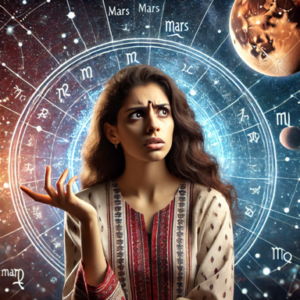
Well, the key attraction of astrology is: It tells you, your future. Along with the curiosity it generates, it catalogues our innermost desires. From material possessions, cars, houses, property, to abstract ideas of education, sports performance, to life essentials of job, money, marriage, and everything in between – Astrology covers the entire gamut of the human experience.
It’s like having a crystal ball that not only shows you what’s going to happen next but also reveals your deepest, darkest desires. Want to know why you’ve always been fascinated by expensive watches? Or why you can’t seem to get enough of luxurious cars? Astrology has got you covered. Want
to know why you’re stuck in a dead-end job with no prospects for advancement? Astrology will tell you that too.
But, is anybody really understanding Astrology?
Astrology is deeply rooted in India’s rich cultural and spiritual heritage, sharing commonalities with other ancient Indian disciplines like yoga. Yoga, often misconstrued as merely an exercise routine, is, in fact,
a holistic system that encompasses not only physical postures but also guidance on life’s fundamental aspects, such as diet, sleep patterns, and mental discipline.
The core of yoga lies in the concept of “the way of life,” which emphasizes living in accordance with nature and cultivating self-awareness.
An apt sentence enlightening us about Yoga is,
“If a person’s reason succumbs to the pull of senses, the person is lost”.
Yoga is pushing the human toward control over the pull of the senses.
At its core, ancient Indian traditions embody a holistic approach to life. Philosophical frameworks and spiritual practices are designed to be mutually enriching, weaving together disparate threads into a rich tapestry that aims to illuminate the entirety of human existence.
The Karma Connection: Understanding the Roots of Astrology
Astrology builds upon the fundamental holistic principles towards life. Tracing an individual’s birth chart to uncover patterns and cycles from past lives. The concept of karma is central to understanding one’s current state and the burden of responsibility that comes with it. By acknowledging and accepting this reality, individuals can take control of their own destiny and work towards personal growth.
At its core, Astrology adheres to a profound metaphysical theory : the ancient Indian concept of Karma. This philosophy posits that every action creates consequences, and that the actions of one
lifetime have a direct impact on the circumstances of the next. In this sense, life can be seen as an intricate cycle of cause and effect, where every decision, every choice, and every event contributes to the ever-unfolding narrative of an individual’s existence.
Astrology takes this idea of Karma very seriously, recognizing that each person’s birth chart is imbued with a unique energetic signature that resonates with their past lives. This “balance dasha” from previous incarnations serves as a blueprint for understanding an individual’s current circumstances and challenges.
For a truly insightful Astrologer, it is essential to convey this concept of Karma, not only to reveal the
intricate web of causes and effects but also to underscore the profound responsibility that rests on the shoulders of each person.
This notion can be profoundly unsettling, as it places the burden of accountability squarely on the individual. However, it is precisely this awareness that offers a powerful catalyst for personal growth and
transformation. By acknowledging the consequences of our actions and recognizing the interconnectedness of our lives across multiple lifetimes, we are empowered to take ownership of our choices and embark on a journey of self-discovery and evolution.
However, modern astrology often deviates from this nuanced approach, focusing instead on superficial practices such as wearing gemstones or performing rituals. This watered-down version neglects the deeper philosophical insights that underpin the practice, leaving the individual’s intellectual capacity and wisdom unchallenged. It’s just easy that way, isn’t it!
I’d argue that most people who practice astrology are doing it on autopilot. They’ve got a rough idea of what the planets mean (sun = happiness, moon = emotions, Jupiter = abundance) but beyond that, they’re winging it. They might claim to be “sensitive” to certain vibrations or energies, but deep down, they have no real understanding of how Astrology actually works.
So, where do we draw the line between fascination and understanding? Is it enough to just glance at your horoscope every now and then, or should we take the time to actually learn about Astrology?
Perhaps the answer lies somewhere in between. Maybe we can start by learning the basics – the zodiac signs, planetary meanings, and some basic understanding of how Astrology works.
So, the next time someone asks you about your zodiac sign or birth chart, don’t just give them a quick answer – take a moment to delve into the rich history and philosophy behind it. Who knows? You might just find yourself becoming an astrology aficionado in no time!
And if all else fails, you can always say that your birthday is June 1st.